Dubai often dazzled visitors with towers, malls, and polished hotels. Still, the city felt most honest at the table. Beneath the shine, there was a warm food culture shaped by desert life, trade routes, family customs, and slow, careful hospitality. This guide showed the traditional Emirati foods that first-time visitors should try in Dubai, and it explained why each dish mattered beyond the first bite.
The goal stayed simple. A new visitor did not need a huge list with random dishes. They needed a clear starting point, a little context, and food that actually felt worth ordering. In this post, you learned which Emirati foods stood out, what they tasted like, and how they helped you understand Dubai in a more grounded, human way.
In Short
The best traditional Emirati foods for first-time visitors in Dubai usually included machboos, harees, thareed, luqaimat, balaleet, regag bread, madrooba, chebab, and Emirati coffee with dates. These dishes gave a visitor a true first look into local flavor, hospitality, and heritage. They were rich, comforting, and often surprisingly gentle in taste, which made them easy for many first-time diners to enjoy.
Table of Contents
- Why Emirati food mattered in Dubai
- What traditional Emirati food meant
- Best Emirati foods first-time visitors should try
- How to choose the right dishes on a first visit
- Common mistakes visitors often made
- A simple ordering template for beginners
- FAQ
- Summary
- Call to action
Intro
Many visitors arrived in Dubai and ate only global food. It happened easily. The city offered everything, and the bright restaurant scene could pull attention in ten directions at once. Yet that choice often missed the quiet heart of the place, and the food most tied to land, memory, and family.
This guide focused on that missing piece. It explained the traditional Emirati dishes that gave a first-time visitor a real taste of Dubai. It was for travelers who wanted more than pretty menus and fast photos. It was for people who wanted a meal with roots.
Context / Definitions
Traditional Emirati food came from the daily life of the United Arab Emirates before modern luxury shaped the skyline. It drew from desert survival, fishing communities, home kitchens, and trade with places like India, Persia, and East Africa. That mix made the cuisine warm, layered, and quietly complex.
The food often used rice, meat, fish, lentils, dried limes, saffron, cardamom, cinnamon, and dates. It was not always fiery. It usually leaned aromatic rather than very hot, which surprised many first-time visitors. A good example was machboos. It looked simple at first, yet the spices sat deep in the rice and stayed with you in a calm, steady way.
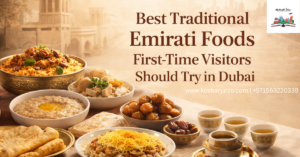
Main Body: Best Traditional Emirati Foods First-Time Visitors Should Try
1. Machboos
Machboos often became the safest and strongest first choice. It was one of the best-known Emirati dishes, and for good reason. The plate usually held spiced rice with meat or fish, often chicken, lamb, or hammour, and it carried a slow warmth rather than a sharp heat.
The flavor came from layered spices, onions, tomatoes, and dried lime. That dried lime gave the dish a distinct depth, slightly earthy and a bit tangy, which made it memorable. The rice usually felt fluffy and fragrant, and the meat sat tender on top or within the rice. For a first-time visitor, this dish gave a full picture of Emirati comfort food without feeling too unfamiliar.
It worked well because it felt complete. You did not need side dishes to understand it. A visitor who wanted one traditional main course could start here and feel on safe ground.
2. Harees
Harees felt humble, almost plain at first glance. Then it settled in. This slow-cooked dish mixed wheat and meat into a soft, thick texture that looked simple but carried a deep, quiet richness.
Some first-time visitors hesitated because of the texture. That made sense. Harees was smooth, almost porridge-like, and it did not have the bright color of restaurant-style dishes. Still, the dish held history in a very direct way, and that was part of its charm. It was often linked with Ramadan, gatherings, and family meals, so eating it felt like stepping a little closer to an old domestic rhythm.
The taste stayed gentle and comforting. It was a good choice for travelers who liked subtle food and wanted something rooted in tradition rather than show.
3. Thareed
Thareed carried the mood of a shared table. It usually combined bread, broth, meat, and vegetables in a dish that felt generous and home-like. The bread softened in the broth and absorbed the flavor, which gave every bite a tender, savory depth.
This was the kind of food that seemed modest on paper but satisfying in real life. The smell often reached first—warm spices, soft stew, slow-cooked meat. Then came the texture, which was layered and soft without feeling heavy. For a visitor who wanted to taste something deeply traditional, thareed offered that old, practical comfort.
It worked especially well for people who enjoyed stews or slow-cooked meals. It also carried a sense of the desert kitchen, where ingredients had to nourish, stretch, and matter.
4. Luqaimat
Luqaimat brought joy very quickly. These small dumplings were crisp outside, soft inside, and usually drizzled with date syrup or honey and sprinkled with sesame seeds. They looked light and playful, and people often reached for another one before the first was fully finished.
For many first-time visitors, luqaimat became the easiest dish to love. The sweetness felt familiar, yet the texture and syrup gave it a local identity. The outside had a slight crunch. The inside stayed airy and warm. When served fresh, they almost glowed.
This was the dessert that people remembered later. Maybe it was the shine of the syrup. Maybe it was the contrast of crisp and soft. Either way, it was a very safe and satisfying entry into Emirati sweets.
5. Balaleet
Balaleet surprised many people. It combined sweet vermicelli noodles with a savory egg topping, which sounded unusual at first. Still, the dish often won people over because it balanced sweetness, spice, and softness in a very gentle way.
The noodles were usually scented with cardamom, saffron, and sugar. Then a thin omelet rested on top. That mix created a breakfast dish that felt both comforting and slightly unexpected. It was delicate, not loud. A first-time visitor who wanted something different, but not difficult, often found this dish memorable.
Balaleet worked best in the morning or early in the day. It showed that Emirati cuisine did not always divide sweet and savory in strict, modern ways. It allowed both to sit together on a one plate.
6. Regag Bread
Regag bread looked simple, but it carried a lot of everyday life. It was a thin, crisp bread, often cooked fresh, and sometimes served plain or topped with ingredients like cheese, egg, or fish sauce. In some settings, it also appeared with other dishes rather than alone.
The beauty of regag sat in its texture. It could be brittle and light, yet it still felt deeply satisfying. Watching it made fresh could be part of the experience too. The smell of hot dough, the quick movement of the cook, and the quiet crackle as it set on heat gave it a small theatrical charm.
For first-time visitors, regag offered something direct and unpretentious. It was not a grand main dish. It was a window into daily Emirati eating habits.
7. Madrooba
Madrooba was a soft, hearty dish made from fish or chicken cooked with spices and grains until everything blended into a thick consistency. It felt nourishing and intimate, the kind of dish that seemed to belong to home rather than performance.
This food did not rely on dramatic presentation. Its value sat in warmth, depth, and comfort. The texture could feel unusual to some visitors, but the flavor was often rich and soothing, especially for those who liked slow-cooked foods with a gentle spice profile.
Madrooba made sense for travelers who wanted to go beyond the obvious famous dishes. It showed another side of Emirati cuisine, one that felt patient, modest, and very rooted.
8. Chebab
Chebab often pleased people who wanted a softer start to local food. These Emirati pancakes were usually lightly sweet and scented with saffron and cardamom. They were often served with date syrup or cheese, which made them feel warm and inviting.
The first bite usually brought softness, then a light perfume of spice. It was not intense. It was calm. Chebab made a good breakfast choice for visitors who wanted something traditional but easy to approach.
This dish also carried a lovely emotional tone. It felt like breakfast made with care, the sort of food that could slow a morning down a little. In a city that moved fast, that mattered.
9. Emirati Coffee with Dates
This pairing was small in size but huge in meaning. Emirati coffee, often called gahwa, was lightly roasted and flavored with cardamom, and it was commonly served with dates. The coffee was not heavy like some visitors expected. It was lighter, more aromatic, and built for conversation rather than rush.
The ritual mattered as much as the taste. Coffee and dates reflected hospitality, welcome, and respect. To accept them was to step into a social tradition that still carried weight. The bitterness of coffee and the sweetness of dates balanced each other beautifully.
For a first-time visitor, this was essential. It may have looked modest, but it gave one of the clearest experiences of Emirati culture. It was a small moment, yes, but a very meaningful one.
10. Stuffed Camel, Fish, or Meat Dishes for Special Menus
Some visitors looked for an iconic or festive dish that felt more ceremonial. In some traditional settings or heritage-style menus, they found larger meat or fish dishes prepared for sharing. These were not always everyday foods, but they reflected the communal side of Emirati dining.
Such dishes worked best when shared with others. The table felt fuller, the mood slower, and the meal more social. A visitor who wanted the sense of an occasion, not just a lunch, often enjoyed this kind of experience more than a solo plate.
Still, for a first trip, these dishes worked best after trying the essentials first. They were memorable, but they were not always the clearest introduction.
Best Practices for First-Time Visitors Choosing Emirati Food
A first meal went better when the visitor chose a mix of familiar and unfamiliar dishes. That balance reduced hesitation and made the meal enjoyable rather than stressful. A safe plan often included one main rice dish, one bread or breakfast item, one dessert, and coffee with dates.
It also helped to stay open with texture. Emirati cuisine often valued softness, slow cooking, and warmth over crunch or flashy plating. Visitors who accepted that rhythm usually enjoyed the food more. The meal felt less like a checklist and more like a small cultural crossing.
Sharing also improved the experience. Many Emirati dishes made more sense in a shared setting, where different textures and flavors could sit side by side. That way, the table felt generous, and the visitor tasted more without overcommitting to one item.
Common Mistakes Section
One common mistake was choosing only international dishes in Dubai and skipping local food entirely. That kept the trip easy, but also flat. The visitor saw the city, yet missed one of its quietest truths.
Another mistake was expecting Emirati food to be heavily spicy. It usually was not. The cuisine often leaned on fragrance, warmth, and depth rather than strong heat, so judging it by a spicy-food standard felt unfair.
Some visitors also ordered only one sweet item and assumed that represented the whole cuisine. That narrowed the picture too much. Emirati food included hearty mains, breakfast dishes, breads, desserts, and rituals like coffee with dates. It needed a wider look.
Examples / Template / Swipe File
A simple first-time ordering template worked very well.
Start with machboos as the main dish. Add regag bread or chebab for variety. Finish with luqaimat and Emirati coffee with dates. That meal felt balanced, traditional, and beginner-friendly.
A second option worked for visitors who wanted softer comfort food. Start with harees or thareed. Then add a balaleet if breakfast dishes were available. End with gahwa and dates. This route felt gentler and a bit more reflective.
A quick checklist also helped:
- Choose one rice or stew dish.
- Add one bread or breakfast item.
- Try one dessert.
- Do not skip the coffee and dates.
- Share dishes when possible.
FAQ
Machboos was the best first main dish for most visitors
It offered familiar comfort with a distinct Emirati flavor. The rice, spice, and meat combination felt approachable and satisfying for a first local meal.
Luqaimat was the easiest traditional dessert to enjoy
It felt light, sweet, and warmly textured. Most first-time visitors liked it quickly because the flavors were welcoming and easy to understand.
Emirati food often felt aromatic rather than very spicy
Many dishes used cardamom, saffron, cinnamon, and dried lime for depth. The result usually felt fragrant and rich, not aggressively hot.
Coffee and dates completed the cultural experience
This pairing mattered beyond taste. It reflected hospitality, social respect, and the slower grace of welcome in Emirati tradition.
Summary / Key Takeaways
- Emirati food gave visitors a deeper view of Dubai.
- Machboos were often the best first main dish.
- Harees and thareed showed the comfort side of the cuisine.
- Luqaimat, balaleet, and chebab added sweetness and variety.
- Regag bread reflected simple daily food traditions.
- Coffee with dates remained essential to the full experience.
- A shared meal often made the first tasting more meaningful.
Call to Action
If you visit Dubai for the first time, make space for one proper Emirati meal. Choose a few dishes with care, slow down, and let the table tell its own story. That meal often stayed longer than the skyline did.