I remembered the first time I smelled hot oil near the Gulf.
The air carried salt, turmeric, and a quiet confidence.
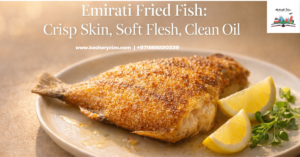
I cooked Emirati-style fried fish and kept it crisp, gentle, and clean.
Quick Answer / TL;DR
In short: I dried the fish well, seasoned it simply, and fried it at steady heat. I handled it with patience, not force. The skin stayed crisp, the flesh stayed soft, and the oil stayed clear.
Table of Contents
- Intro
- Context and Definitions
- Main Body: Step-by-step “How To”
- Step 1: Choose the right fish
- Step 2: Salt, spice, and rest
- Step 3: Drying for crisp skin
- Step 4: Light coating, not heavy crust
- Step 5: Clean oil, steady temperature
- Step 6: Drain, rest, and serve
- Common Mistakes
- Examples, Templates, Swipe Files
- FAQ
- Summary / Key Takeaways
- Call to Action (CTA)
Intro
I cooked this fish on a late afternoon, when the light looked dusty-gold. I heard the small crackle before I saw it. The sound felt like a promise that something went right. I wanted crisp skin, but I also wanted soft flesh, not dry flakes, and I wanted oil that smelled clean.
Emirati fried fish often felt simple, yet it demanded attention. I noticed how small details carried the whole result. I slowed down and watched the pan like a habit. I kept my hands calm, even when oil popped a little. That calm made the food taste more sure, in a way.
Context / Definitions
“Crisp skin” meant the surface turned firm and brittle, without turning hard like glass. It did not need thick batter. It needed dryness, heat, and a light touch, and a bit of timing slip could ruin it. “Soft flesh” meant the inside stayed juicy and pearly, not chalky.
“Clean oil” meant the oil stayed clear, smelled neutral, and did not turn bitter. It stayed steady because crumbs stayed out and heat stayed controlled. I treated oil like an ingredient, not a utility, which sounded fussy but worked. One small example stayed with me: when I shook off extra flour, the oil stayed calmer.
Main Body
A) Step-by-step “How To”
Step 1: Choose the right fish
I picked a firm, fresh fish with intact skin. I preferred Gulf fish like hammour, safi, sheri, or kingfish, because the flesh held together. I avoided fish that already smelled sharp. I kept the pieces similar in thickness, so cooking stayed even.
- What to do: I used skin-on fillets or butterflied whole fish. I checked for scales and pin bones.
- Why it worked: Firm flesh resisted breaking, and skin protected moisture.
- Example/tools: I used a fish tweezers and a small knife, and I kept the board dry.
- Mistakes to avoid: I did not cut pieces too thin, and I did not fry half-frozen fish.
Step 2: Salt, spice, and rest
I seasoned the fish with salt first, then warm spices. I used turmeric, cumin, coriander, black pepper, and a pinch of chili, and sometimes I added ground dried lime for a citrusy edge. I rubbed it gently, especially on the skin side. I let it rest in the fridge for a short while.
- What to do: I salted, spiced, then rested the fish for 15–25 minutes.
- Why it worked: Salt tightened surface and helped moisture move out.
- Example/tools: I used a shallow tray and covered it loosely with paper.
- Mistakes to avoid: I did not marinate too long, because the texture turned tight.
To be honest, this step felt emotional for me. The spices smelled like heat and sand and a little sweetness. I felt like I cooked with memory, not just hunger. The fish looked more alive after seasoning, like it wore a color. I kept that color gentle, not loud.
Step 3: Drying for crisp skin
I dried the fish like it mattered, because it did. I patted it with paper towels until the surface stopped shining. I let it sit uncovered for a few minutes, so air finished the job. I treated the skin like it needed space, not pressure.
- What to do: I patted dry, then air-dried the fish for 5–10 minutes.
- Why it worked: Dry surfaces blistered and crisped instead of steaming.
- Example/tools: I used a rack over a tray, which kept the underside from sweating.
- Mistakes to avoid: I did not stack pieces, and I did not skip the second part.
I noticed the kitchen got quieter here. The fish waited, and I waited too. I felt a small tension, because frying punished impatience. I breathed and watched the edges. That pause gave me better food, and it gave me steadier hands.
Step 4: Light coating, not heavy crust
I coated the fish lightly, almost like dusting furniture. I used flour with a little rice flour or cornstarch, and I added a pinch of salt and turmeric to the mix. I pressed it gently, then I shook off extra. I wanted a thin shell that hugged skin.
- What to do: I used a light flour mix and removed excess.
- Why it worked: Thin coating crisped fast and stayed delicate.
- Example/tools: I used a wide bowl and a clean plate for resting.
- Mistakes to avoid: I did not make thick batter, and I did not coat while the fish was wet.
This was where I used to overdo it. I used to chase crunch like a trophy. The result tasted heavy and looked messy, and oil turned dark too fast. When I eased up, the fish tasted clearer, and maybe more Emirati in spirit.
Step 5: Clean oil, steady temperature
I heated oil in a heavy pan and kept it deep enough for shallow-frying. I used a neutral oil with high heat tolerance, and I warmed it slowly until it shimmered. I tested with a tiny pinch of flour, and it sizzled steadily, not violently. I kept heat at medium-high and avoided dramatic spikes.
- What to do: I heated oil gradually and held steady heat.
- Why it worked: Stable heat browned coating while protecting inside moisture.
- Example/tools: I used a thermometer when I had one, aiming around 175–185°C.
- Mistakes to avoid: I did not overheat oil until it smoked, and I did not overcrowd the pan.
I fried in small batches, which felt slower but stayed clean. I watched crumbs fall and removed them between batches with a slotted spoon. I listened to the sound, because the sound told the truth. When the crackle softened, the moisture reduced, and the fish neared done. I flipped once, and only once, with a thin spatula.
Step 6: Drain, rest, and serve
I lifted the fish and let it drain on a rack, not directly on paper. I salted lightly while it was hot, because that salt stuck better. I let it rest a few minutes before serving. The skin stayed crisp, and the flesh stayed gentle and steaming.
- What to do: I drained on the rack, salted lightly, and rested briefly.
- Why it worked: Steam escaped, so the crust stayed crisp.
- Example/tools: I used a wire rack, or a plate with a folded towel under.
- Mistakes to avoid: I did not cover the fish, and I did not stack pieces.
I served it with lemon, simple salad, and warm bread, and sometimes with rice. The smell felt clean and warm, not greasy. The first bite always surprised me, even when I expected it. The skin cracked softly, then the inside turned silky. I felt relief, which sounded dramatic, but food did that.
“Common Mistakes” I saw most problems came from moisture and rushing. Wet fish made steam, and steam ruined crispness fast. Crowding the pan dropped the temperature, and oil soaked in instead of sealing out. I learned to respect spacing in the pan, even when I wanted speed.
I also saw oil got dirty from loose flour and burnt crumbs. Those crumbs kept cooking, then they stained the oil bitter. I skimmed often and replaced oil sooner than I wanted. I kept the heat steady, not heroic, and the oil stayed clear longer.
Examples / Templates / Swipe Files
Mini template: Emirati-style seasoning mix
I mixed 1 teaspoon salt, 1 teaspoon turmeric, 1 teaspoon ground coriander, 1 teaspoon ground cumin, and ½ teaspoon black pepper. I added ¼ teaspoon chili, if I wanted warmth. I added a pinch of ground dried lime when I had it.
Coating checklist
I patted the fish dry twice. I dusted lightly with flour. I shook off the extra coating fully. I rested the coated fish two minutes before frying, on a plate.
Clean-oil routine
I fried in batches of two or three pieces. I skimmed crumbs after each batch. I waited for oil to return to a steady shimmer. I stopped and cooled the oil when it smelled sharp.
Serving swipe line
I plated the fish with lemon, herbs, and bread. I kept the sides bright and simple. I avoided heavy sauces, because fish already tasted complete. I served it hot, not delayed.
FAQ
Holding crispness after frying
I kept the fish on a rack in a warm oven, not covered. I avoided stacking, because trapped steam softened skin. I served it within 20 minutes for the best crackle.
Keeping oil clean across batches
I removed crumbs frequently and kept the coating light. I maintained steady heat so flour did not burn quickly. I replaced oil when the color darkened or the smell turned bitter.
Choosing between whole fish and fillets
I used whole fish when I wanted deeper flavor and juicier flesh. I used fillets when I wanted speed and easier plating. I kept skin on in both cases, because skin guarded moisture.
Preventing the flesh from drying
I avoided overcooking and avoided very high heat. I flipped once and watched the sound fade. I rested the fish briefly, which kept the juices settled inside.
Getting flavor without heavy batter
I used spices in the seasoning and a tiny pinch in the coating. I finished with lemon and light salt, which lifted everything. I let the fish taste like fish, not like crust.
Summary / Key Takeaways
- I chose firm, fresh fish with skin intact.
- I salted and spiced, then rested briefly.
- I dried the surface until it stopped shining.
- I coated lightly and removed excess flour.
- I held the oil temperature steady and fried in small batches.
- I drained on the rack and rested before serving.
- I protected the oil from the crumbs, so it stayed clean.
Call to Action
I kept this method as my default, because it stayed reliable. I wrote it down after a few tries, with small notes in the margin. I suggested you cook it once exactly as written, then adjust the spice level slowly. I saved the best batches for quiet evenings, when the kitchen felt calm.